Pierres Dorées or the Crus: Which Beaujolais to Taste
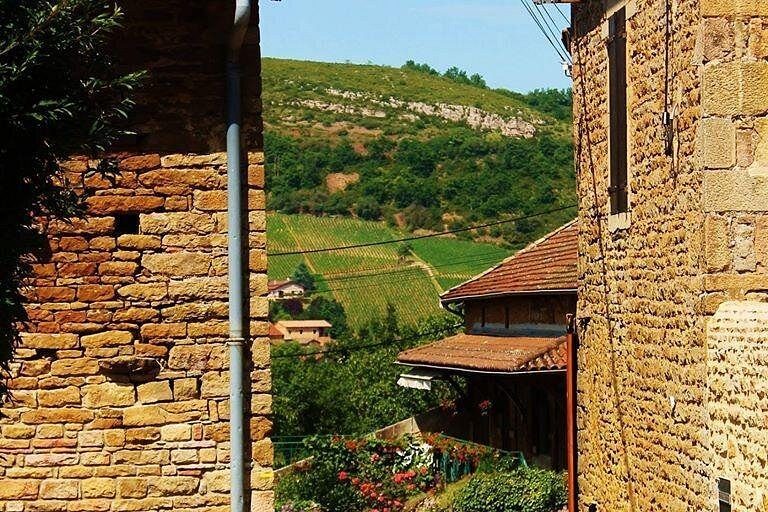
The Beaujolais is two different days out of Lyon. The south is the Pierres Dorées, the golden-stone villages closest to the city. The north is the crus, the ten wines with village names such as Fleurie and Morgon. This guide helps you pick the half that suits you, then the tour that goes there. If you came looking for a golden stones beaujolais wine tour, you are in the southern half already.
What is the difference between the Pierres Dorées and the crus?
The vineyard runs 55 km from south to north, and Inter Beaujolais splits it cleanly. The regional appellations lie mostly in the south, and the communal ones, the crus, lie in the north. So the half you pick decides the wines you taste.
The ground changes too. The south has clay soils, sometimes chalky, on rolling hills. The north has sandy soils, about half of them granite. Inter Beaujolais counts more than 300 different soils across the region, which is why two estates a few kilometres apart can pour very different glasses.
Gamay covers nearly all of it, about 97% of the vines, in both halves. The grape is the same. The ground, the appellation and the villages are what you choose between.
Which half is closer to Lyon?
The south. Inter Beaujolais puts the vineyard less than 30 minutes' drive from Lyon, and that is the Pierres Dorées you reach first. Oingt, the best-known village there, is about 30 km from the city.
The crus sit further up the strip, so a trip there spends more of its hours on the road. The shared crus full day runs six to seven hours, and some private days start with a train to Belleville-sur-Saône instead of a drive out of Lyon.
Where are the golden-stone villages?
In the south, around Oingt and Le Bois-d'Oingt. The stone that gives the Pierres Dorées their name is an ochre limestone from the Jurassic, about 174 million years old, according to the Beaujolais Geopark. Iron oxide gives it its yellow.
Oingt is one of the Plus Beaux Villages de France. It keeps a 12th-century tower with a panoramic terrace, a mechanical-music museum and a Maison du Terroir tasting room. If villages matter to you as much as wine, this is your half. The sights are set out on things to do in the Beaujolais.
Where are the famous names?
In the north. The ten crus are Brouilly, Chénas, Chiroubles, Côte de Brouilly, Fleurie, Juliénas, Morgon, Moulin-à-Vent, Régnié and Saint-Amour. Each is named for its village or its hill, and each is an appellation of its own.
You will see their landmarks from the van. The Moulin-à-Vent windmill stands at 278 m and is a listed historic monument. The chapel of Notre-Dame aux Raisins has crowned Mont Brouilly since 1854. Fleurie has the La Madone hill, which the council describes for its panorama. Morgon has the Côte du Py.
What does each half pour?
Both halves pour mostly red gamay, since reds are 95% of the region's wine. The label is what changes. In the south you taste Beaujolais and Beaujolais-Villages. In the north you taste crus, often two different ones in a day.
The tours say it plainly. The south half day from Rhône Trip opens with a white and a red around Oingt, then a family estate where you meet the producer. The Golden Stones day tastes at a Pierres Dorées winery and at a second one in Montmelas, in the Beaujolais-Villages appellation. Up north, the crus half day visits two estates in two different cru appellations, and the Château de Pizay day pours twelve wines on the château's own circuit.
Is there white Beaujolais, and where?
Yes, and most of it grows in the south. Inter Beaujolais puts more than 300 hectares of whites inside the Beaujolais appellation, around Liergues, Le Bois-d'Oingt and Bully. So if a white is on your list, the Pierres Dorées is the half to pick.
Rosé is an appellation here too, since 1937. You may meet one on the south half day, whose listing promises reds, a white and perhaps a rosé.
How do the two halves compare?
Here is the choice side by side, from the council's own figures and the tours' own listings.
| The Pierres Dorées (south) | The crus (north) | |
|---|---|---|
| Where | Nearest Lyon, the south of the vineyard | Further north, towards Mâcon |
| Appellations | Mostly Beaujolais, the regional AOC | The ten crus, with Beaujolais-Villages around them |
| Soils | Clay, sometimes chalky; golden limestone | Often sandy, about half of it granite |
| The look | Golden-stone villages on rolling hills | Cru villages, a windmill, a hilltop chapel |
| Colour | Reds, and 300+ ha of whites in the Beaujolais AOC | Mostly red: reds are 95% of the region |
| Shared half day | $112 to $126 a person | $112 to $126 a person |
| Shared full day | Only as the morning of the both-halves day | $161 a person |
| Best for | Villages, a short drive, a first taste | Wines you know by name |
Which tours go south, and which go north?
Every shared half day picks one half. South: the Golden Stones half day, the Rhône Trip south half day and its Montmelas twin. North: the crus half day, the Château de Pizay half day and the 2 pm afternoon crus run.
The full days lean north. The crus full day spends about three hours around Fleurie and three in Romanèche-Thorins, with lunch between. Most private days head north too. The exceptions are the private Golden Stones half day and the day that pairs the golden-stone villages with Pérouges, a medieval town east of Lyon in the Ain. You can compare every shared start on beaujolais wine tour from lyon.
Which half suits a half day?
Both do, and the fares are close: $112 to $126 in the south, $112 to $126 in the north. Every one runs about four hours from Place Bellecour, with the tastings in the fare and eight guests at most.
The south gives you the golden-stone villages on the way. The north gives you the names. If you can only start in the afternoon, the north has the answer: the crus run leaves at 2 pm and is back at 6:30 pm. Every short option is on beaujolais half day wine tasting tour.
Can you do both in one day?
Yes, on one shared day. It meets at the Saint-Exupéry statue beside Café Bellecour at 9 am, tastes near Oingt, walks you through the village, stops for lunch near Mont Brouilly and ends at a Fleurie estate. It takes eight to nine hours and costs $184 a person.
Lunch is not in that fare: the restaurant is booked for the group, with menus from EUR 25. If eight hours is too long, split the region over two days instead, a half day in each half.
Which half should you pick for a first visit?
Pick the south if you want villages, a white, and a short drive. The Golden Stones half day is the most-reviewed tour we list, at $112.
Pick the north if you want the wines you already know from a wine list. The crus full day gives you six hours among them for $161. And if you want lunch in the fare and your own car, the Land Rover day covers the crus privately, from Belleville station. The full picture of the two halves is on the Beaujolais wine route.
What if you would rather stay in Lyon?
Then skip both halves for now. The Croix-Rousse blind tasting pours five wines in two hours, a Beaujolais among them, in a silk workers' loft in the city. It will not show you a vine, but it will tell you which wines you like before you commit a day to them.
Frequently asked questions
What is the difference between the Pierres Dorées and the crus?
Which half is better for a first Beaujolais visit?
Is there white Beaujolais?
Can you see the Pierres Dorées and the crus in one day?
Is Oingt worth visiting?
What happens at the Château de Pizay?
Should you book a half day or a full day?
Where these facts come from
The region, the villages and the weather come from the official pages below. Everything about a tour comes from its own booking page. Check both before you travel, because both change.
- Inter Beaujolais: the 12 appellations
- Inter Beaujolais: a mosaic of soils
- Inter Beaujolais: gamay
- Inter Beaujolais: the Beaujolais appellation
- Inter Beaujolais: three colours
- Inter Beaujolais: Moulin-à-Vent
- Inter Beaujolais: Côte de Brouilly
- Beaujolais UNESCO Global Geopark: the geological history
- Les Plus Beaux Villages de France: Oingt
Tours for either half
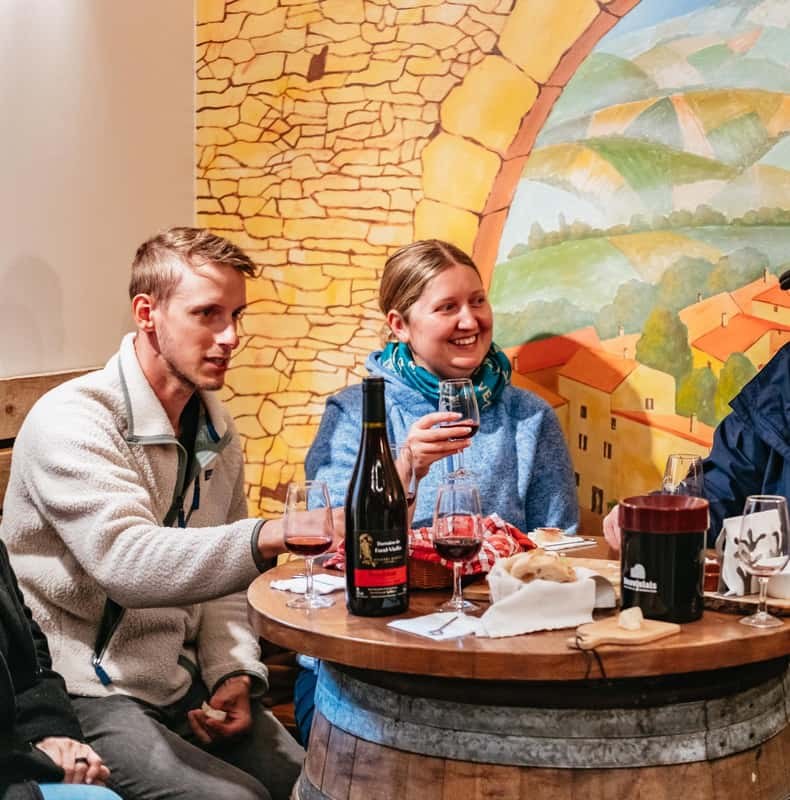
From Lyon: Golden Stones Beaujolais Wine Tasting Tour
Four hours from the Bellecour tourist office into the Pierres Dorées: a family winery with a Lyon mâchon, then a second in Montmelas, in the Beaujolais-Villages appellation.
From $112 per person
Check Availability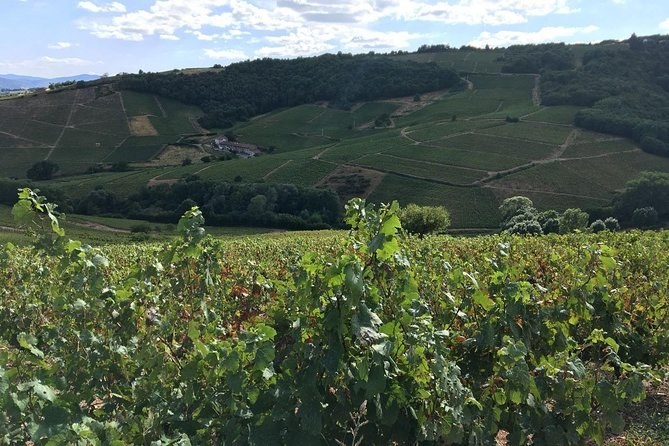
Beaujolais Crus wine tour from Lyon Full day
A shared full day from Place Bellecour at 9 am: about three hours at an estate around Fleurie, lunch at a village restaurant at your own cost, then Romanèche-Thorins.
From $161 per person
Check Availability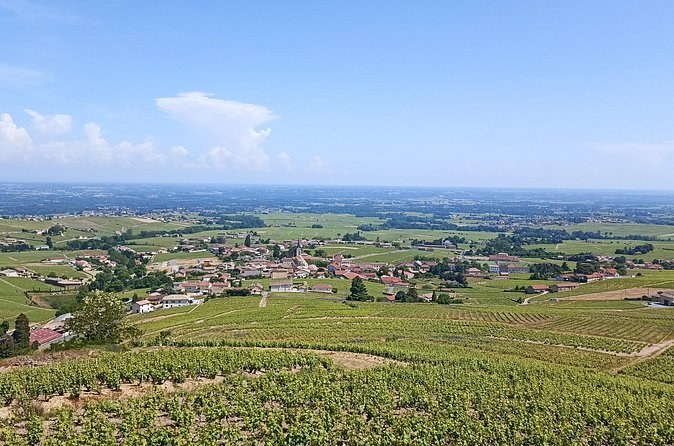
Beaujolais Day Guided Tour - Winery Tours and Tastings
Both halves of the region in one shared day from the Saint-Exupéry statue on Place Bellecour: a winery near Oingt, lunch near Mont Brouilly, then an estate at Fleurie.
From $184 per person
Check AvailabilityNext: Picked your half? Compare the tours for it on Beaujolais Tours.