Beaujolais Weather by Month
Hours, prices and access verified by the Beaujolais Tours team — last checked 2026-09-25.
A Beaujolais wine day is half in the cellars and half among the vines. The
cellars do not care about the sky, but the vineyard walk, the viewpoints and an open vintage
car do. Match your Beaujolais tour to the month, and pack for the hours outdoors.
What the weather does to a Beaujolais wine day
Rain rarely stops a tasting, because the estates pour under a roof. The crus full day from
Place Bellecour runs in all weather, so you dress for the day rather than wait for it. What
changes is the time you spend outdoors: the walk in the rows, a viewpoint, a village square.
Some days are more exposed than others. The vintage Land Rover and Defender days drive open
country roads in old cars, and the Defender half day holds a food-and-wine tasting in the vines,
weather allowing. The wine merchant's day picnics on a hillside at lunch.
Some private days may be cancelled by the operator for poor weather: the Land Rover day,
one Signature day and the private tasting day. If that happens, you are offered another date
or a full refund. Every tour we list refunds in full if you cancel 24 hours ahead.
Heat matters more than rain. On the hottest days a vineyard walk at 3 pm is hard work, and
the afternoon crus tour is out from 2 to 6:30 pm. In winter, frost and short days are the
limit, not the wine.
The figures below are Météo-France's 1991-2020 normals for Lyon-Bron, at 202 m, where every
day starts. Mâcon, at the north end of the crus, runs about one degree cooler.
The Beaujolais month by month
Beaujolais weather in January
You can expect highs of 7.1 °C and lows of 1.1 °C. About 50 mm of rain falls, on 8 days, and you get 71 hours of sun. Frost comes on about 13 nights. The coldest month. Wear gloves for the vineyard stops and a warm layer in the cellars.
Beaujolais weather in February
You can expect highs of 9.0 °C and lows of 1.4 °C. About 42 mm of rain falls, on 8 days, and you get 102 hours of sun. Frost comes on about 10 nights. The driest month of the year. The estates are quiet, and the private days run as usual.
Beaujolais weather in March
You can expect highs of 13.8 °C and lows of 4.2 °C. About 49 mm of rain falls, on 8 days, and you get 174 hours of sun. Sunshine almost doubles on February. Frost comes on only four nights, so a morning walk in the rows is far less raw than in winter.
Beaujolais weather in April
You can expect highs of 17.4 °C and lows of 7.2 °C. About 69 mm of rain falls, on 9 days, and you get 198 hours of sun. Frost is almost gone. Rain rises, so pack a waterproof for the walk in the rows.
Beaujolais weather in May
You can expect highs of 21.5 °C and lows of 11.2 °C. About 81 mm of rain falls, on 10 days, and you get 224 hours of sun. The first hot days arrive. It is one of the wetter months, so check the forecast the evening before.
Beaujolais weather in June
You can expect highs of 25.6 °C and lows of 15.0 °C. About 74 mm of rain falls, on 8 days, and you get 257 hours of sun. About 6 days reach 30 °C. The long light suits the afternoon crus tour, which is back in Lyon at 6:30 pm.
Beaujolais weather in July
You can expect highs of 28.2 °C and lows of 17.0 °C. About 67 mm of rain falls, on 8 days, and you get 288 hours of sun. About 11 days reach 30 °C. The hottest and sunniest month. Book a morning start and taste indoors after noon.
Beaujolais weather in August
You can expect highs of 28.0 °C and lows of 16.6 °C. About 66 mm of rain falls, on 7 days, and you get 263 hours of sun. About 11 days reach 30 °C. Almost as hot as July. Bring water, since your shared fare may leave it out.
Beaujolais weather in September
You can expect highs of 23.1 °C and lows of 12.8 °C. About 82 mm of rain falls, on 7 days, and you get 204 hours of sun. About 2 days reach 30 °C. The heat eases. The harvest date is set each year, so ask your operator whether the estates are picking.
Beaujolais weather in October
You can expect highs of 17.7 °C and lows of 9.6 °C. About 100 mm of rain falls, on 10 days, and you get 131 hours of sun. The wettest month of the year. A cellar tasting is under a roof, the vineyard walk is not.
Beaujolais weather in November
You can expect highs of 11.4 °C and lows of 4.9 °C. About 87 mm of rain falls, on 9 days, and you get 79 hours of sun. Frost comes on about 4 nights. Beaujolais Nouveau is released on Thursday 19 November 2026. Days are short, so the vines come early in the day.
Beaujolais weather in December
You can expect highs of 7.7 °C and lows of 2.0 °C. About 54 mm of rain falls, on 9 days, and you get 59 hours of sun. Frost comes on about 10 nights. The darkest month. The private winter day opens with mulled wine at the Château de Corcelles.
The seasons, and which one you want
| Season | Average high | Rain | Sunshine | What it means for you |
|---|
| Spring: March–May | 17.6 °C | 199 mm | 596 h | Frost fades; rain rises towards May |
| Summer: June–August | 27.3 °C | 207 mm | 808 h | The hot days; a morning start pays |
| Autumn: September–November | 17.4 °C | 270 mm | 414 h | The wettest month, then Nouveau |
| Winter: December–February | 7.9 °C | 145 mm | 232 h | Frost on a third of the nights; short days |
Late spring and early autumn are the easy choice. In May and September, highs run from
21 °C to 23 °C, frost is gone, and you have over 200 hours of sun a month. Both months suit a full day outdoors.
Summer is the brightest season, with 288 hours of sun in July. It is also the one with heat:
about 31 days a year reach 30 °C at Lyon-Bron, nearly all of them in June, July and August. If
you come then, you want a morning start and a cellar after lunch.
Autumn turns wet. October is the wettest month of the year, and November follows it. But
November is also the month of Beaujolais Nouveau, and the new wine is in every glass from the
third Thursday.
Winter is the quiet season. You get 59 to 102 hours of sun a month and frost on about a third
of the nights, but the estates have time to talk. If you come for the wine alone, any month
works.
Best time of day
In summer, take the vines in the morning. The crus full day leaves Place Bellecour at 9 am,
and most private days collect you between 9 and 10 am, so you are in the rows before the
afternoon heat. Bring water and sun cream, and a hat for the viewpoints.
In spring and autumn, the afternoon works well. The afternoon crus tour leaves at 2 pm and
reaches La Madone above Fleurie in the late afternoon, then ends in a château cellar in Chénas. You
are back on Place Bellecour at 6:30 pm, in time for dinner in Lyon.
In winter, reverse the summer plan. Spend the morning in a cellar, then walk the vines in the
warmest hours after noon. Days are short, so an afternoon half day ends near dusk.
Frequently asked questions
What is the weather like in the Beaujolais in September?
Warm, with rain on about 7 days. Lyon-Bron averages highs of 23.1 °C and lows of 12.8 °C, with about 83 mm of rain and 204 hours of sun.
What is the wettest month in the Beaujolais?
October, with about 100 mm of rain on 10 days at Lyon-Bron. February is the driest, at about 42 mm.
How hot does the Beaujolais get in summer?
July averages 28.2 °C, and about 11 days reach 30 °C. The record at Lyon-Bron is 41.4 °C, set on 24 August 2023.
Do Beaujolais wine tours run in the rain?
Yes. The crus full day runs in all weather, and the tastings are under a roof. Some private days may be cancelled by the operator for poor weather, and then you get another date or a full refund.
Is the north of the Beaujolais colder than Lyon?
A little. Mâcon, at the north end, averages 27.1 °C in July against 28.2 °C at Lyon-Bron, and gets about 834 mm of rain a year.
Where these facts come from
Temperatures, rain, sunshine, hot days and frost come from Météo-France's climate sheets for
Lyon-Bron and Mâcon. The Nouveau date comes from Inter Beaujolais, and the weather terms from
each tour's own booking page.
Full days to plan around the forecast
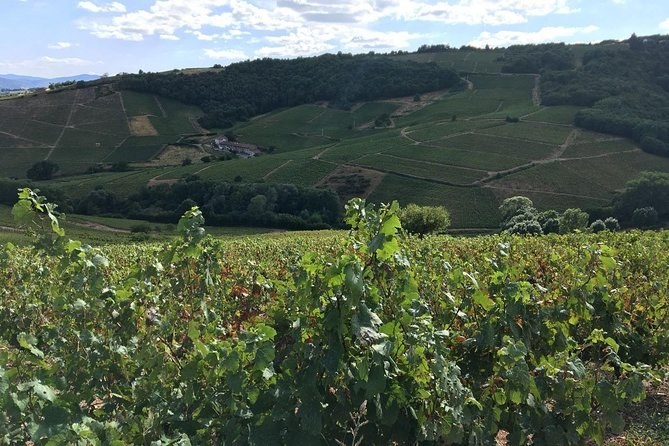
A shared full day from Place Bellecour at 9 am: about three hours at an estate around Fleurie, lunch at a village restaurant at your own cost, then Romanèche-Thorins.
From $161 per person
Check Availability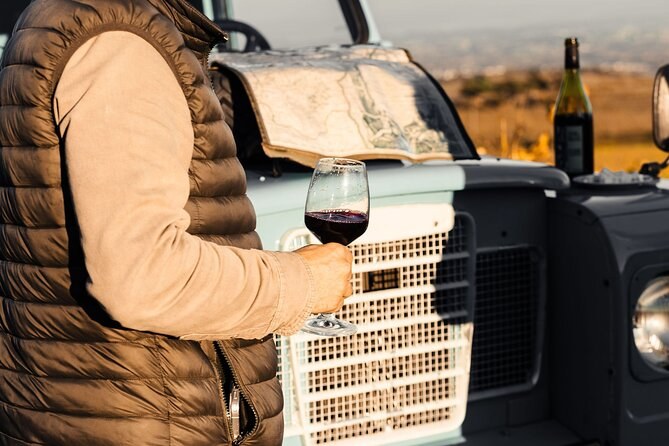
A private day from Mâcon Ville station at 9:30 am: mulled wine at the Château de Corcelles, estates in Romanèche-Thorins and Fleurie, lunch in the fare, and a family liqueur distillery.
From $567 per person
Check Availability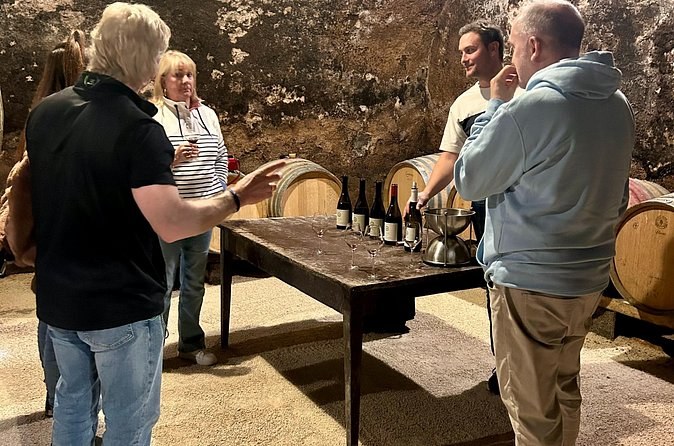
A private day from your Lyon address at 10 am: two winery tastings either side of a three-course lunch with wine at a restaurant in the vines, past Mont Brouilly and Villié-Morgon.
From $578 per person
Check Availability