Beaujolais Wine Facts: Gamay, Twelve Appellations and the Geopark
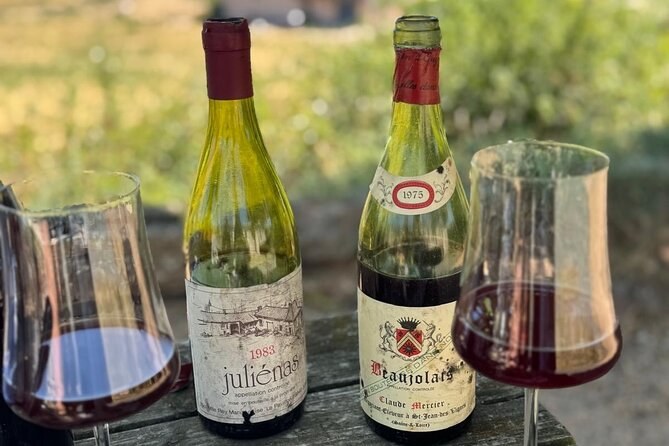
The short answer. The Beaujolais is 13,500 hectares of vines in 12 appellations, planted almost entirely with one grape, gamay. It runs 55 km north to south, starts less than half an hour from Lyon, and has been a UNESCO Global Geopark since 2018. Its reds are 95% of what it makes, and its new wine is released on the third Thursday of every November.
The figures in one table
Inter Beaujolais, the region's wine council, publishes most of these figures, and the Geopark publishes the rest. The stories behind them follow.
| Fact | Figure | Source |
|---|---|---|
| Length of the vineyard | 55 km, north to south | Inter Beaujolais |
| Vineyard area | 13,500 hectares | Inter Beaujolais |
| Appellations | 12, ten of them crus | Inter Beaujolais |
| Share planted with gamay | about 97% | Inter Beaujolais |
| Share of red wine | 95% | Inter Beaujolais |
| Soils identified | more than 300 | Inter Beaujolais |
| UNESCO Global Geopark | since 2018, renewed 2022 | Beaujolais Geopark |
| Geopark area | about 1,550 km², 121 municipalities | Beaujolais Geopark |
1. It is a one-grape region
Whatever you taste on a Beaujolais day, you are almost certainly drinking gamay. It covers about 97% of the vines, and the council's gamay page puts it at 98%. Half of the world's 30,000 hectares of gamay grow here. It has been planted in the region since the early 17th century, and before phylloxera it covered an estimated 160,000 hectares across France.
Gamay is a natural cross between pinot noir and a white grape called gouais blanc. Its full name, gamay noir à jus blanc, says what you would find if you crushed it: dark skins, clear juice.
The grape ripens early and gives, in the council's words, supple and fruity wines that are low in alcohol. Expect raspberry, wild strawberry, blackberry and black cherry in your glass, and sometimes pepper or flowers.
2. Twelve appellations, and ten of them are villages
Beaujolais and Beaujolais-Villages are the regional names. The other ten are the crus, named after the communes they grow in: Brouilly, Chénas, Chiroubles, Côte de Brouilly, Fleurie, Juliénas, Morgon, Moulin-à-Vent, Régnié and Saint-Amour. Each is set out in the ten Beaujolais crus explained.
3. It is red, but not only red
Red is 95% of production. Beaujolais rosé has been an appellation wine since 1937, the same year the Beaujolais appellation itself was recognised. There are whites too: more than 300 hectares of them in the Beaujolais appellation, around Liergues, Le Bois-d'Oingt and Bully.
4. More than 300 soils
Between 2009 and 2018 a soil survey office, Sigales, mapped the vineyard almost plot by plot with the Rhône Chamber of Agriculture. It found more than 300 soils. The council calls the Beaujolais the French vineyard with the richest and most complex geology, and growers now use the maps to work each plot on its own terms.
5. It is a UNESCO Global Geopark, not a World Heritage Site
The label came in 2018 and was renewed in April 2022 for four years. The Geopark covers about 1,550 km² and 121 municipalities, home to just over 240,000 people, on the edge of the Massif Central within sight of the Alps. It recognises the region's geology. It is a different UNESCO programme from the World Heritage list, and the Beaujolais is not on that list.
6. The golden stone was once the poor man's stone
The Plus Beaux Villages de France tell the story in Oingt: the pierre dorée was the cheap local building stone, until rich Lyon families chose it for their town houses in the Renaissance. Oingt itself keeps a 12th-century tower with a panoramic terrace. The villages are the heart of the southern half-day tours.
7. Nouveau has a fixed date
Beaujolais Nouveau is released every year on the third Thursday of November. In 2026 that is 19 November. The council says tens of millions of people around the world raise a glass of it that week.
8. Every hill has a story
- Fleurie: the name has nothing to do with flowers. The council's story is that it comes from a Roman legionary, Florus, said to have settled on one of its hills.
- Chiroubles: the highest vines in the Beaujolais, often on slopes over 30%.
- Mont Brouilly: the Notre-Dame aux Raisins chapel on the summit has watched over the harvests since 1854.
- Moulin-à-Vent: the windmill that names the cru is a historic monument, at 278 metres.
- Morgon: the most claimed of its named vineyard sites is the Côte du Py.
9. Nouveau is only one kind of Beaujolais
If you know the region only from Nouveau, you know one style of it. The council sorts its wines by the kind of fruit you taste: a cheerful fruitiness for the festive wines, which is where Nouveau belongs; a racy fruitiness for the expressive ones; and a complex fruitiness for the exceptional wines, which can age in the cellar. A day in the crus is where you taste the last of these.
10. Gamay has to be tamed
Left alone, gamay grows too much fruit: the more vines on a plot, the more prolific it becomes. Growers keep it in check by pruning it short, in the gobelet style, though other methods are spreading. When you walk the vines with a grower, ask how they prune; you will see the low, bushy vines for yourself.
11. The region runs a gamay competition
Since 2010 Inter Beaujolais has organised the International Gamay Competition, to raise the grape's profile with drinkers and growers worldwide. If you want to know which gamays the region itself rates, ask your guide.
See the facts for yourself
Most of this is easier to understand when you have a glass in your hand. The southern half days drive through the golden-stone villages, and the crus days stand you on the granite. How to choose between them is on the Beaujolais wine route, and every village worth a stop is on things to do in the Beaujolais.
Where these facts come from
- Inter Beaujolais, the Beaujolais wine council
- Inter Beaujolais: the 12 appellations
- Inter Beaujolais: gamay
- Inter Beaujolais: three colours
- Inter Beaujolais: the Beaujolais appellation
- Inter Beaujolais: a mosaic of soils
- Inter Beaujolais: Beaujolais Nouveau
- Inter Beaujolais: Fleurie
- Inter Beaujolais: Chiroubles
- Inter Beaujolais: Côte de Brouilly
- Inter Beaujolais: Moulin-à-Vent
- Beaujolais UNESCO Global Geopark
- Les Plus Beaux Villages de France: Oingt
Days that teach you the wine as you taste it
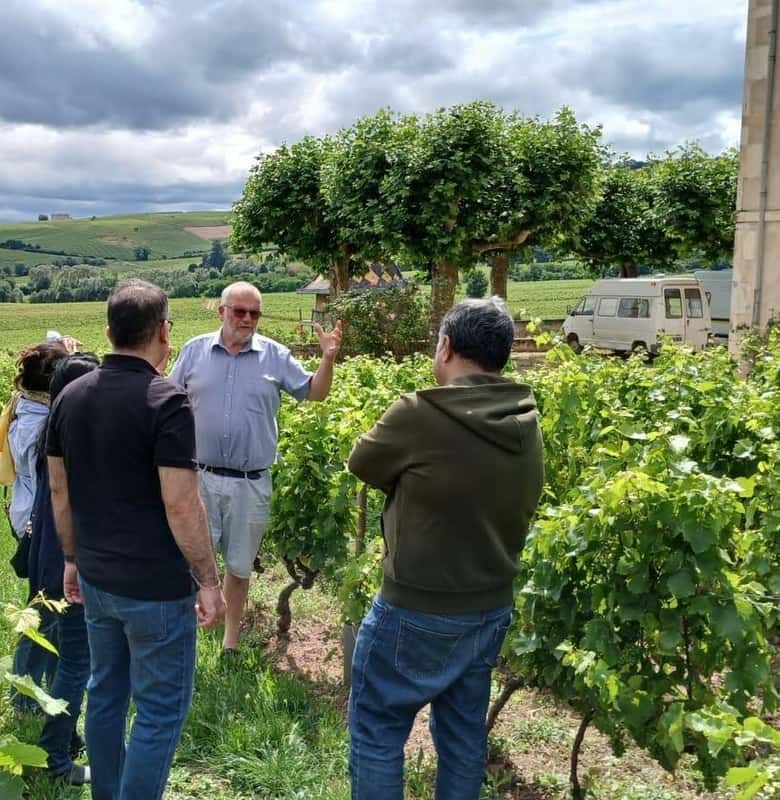
From Lyon: Beaujolais Wine Route Half-Day Tour
Château de Pizay's twelve-wine sensory circuit, the road past Fleurie, Morgon and Moulin-à-Vent, then five wines at a family winery, all in four hours from Place Bellecour.
From $112 per person
Check Availability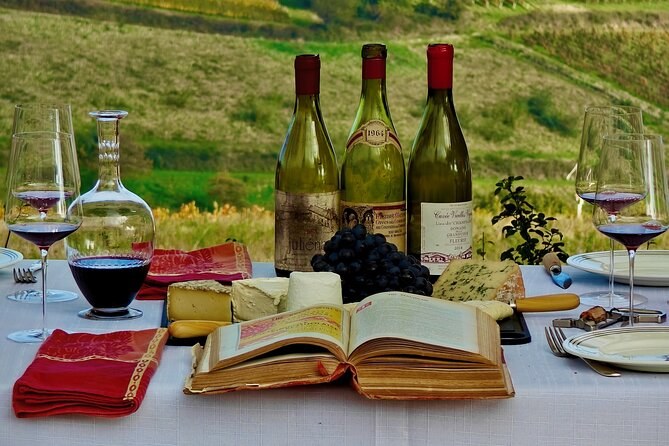
Private Beaujolais wine tour
A wine merchant's private day: Fleurie and Villié-Morgon in the morning, the Mont Brouilly viewpoint, and a picnic that pours gamay from the 1960s to today, 15 to 20 wines in all.
From $1,158 per person
Check AvailabilityNext: Read the villages behind the labels in the ten crus explained. Every fare from Lyon sits side by side on Beaujolais Tours.